Entrepreneurs Fight Back: AI Legal Defense Success Stories
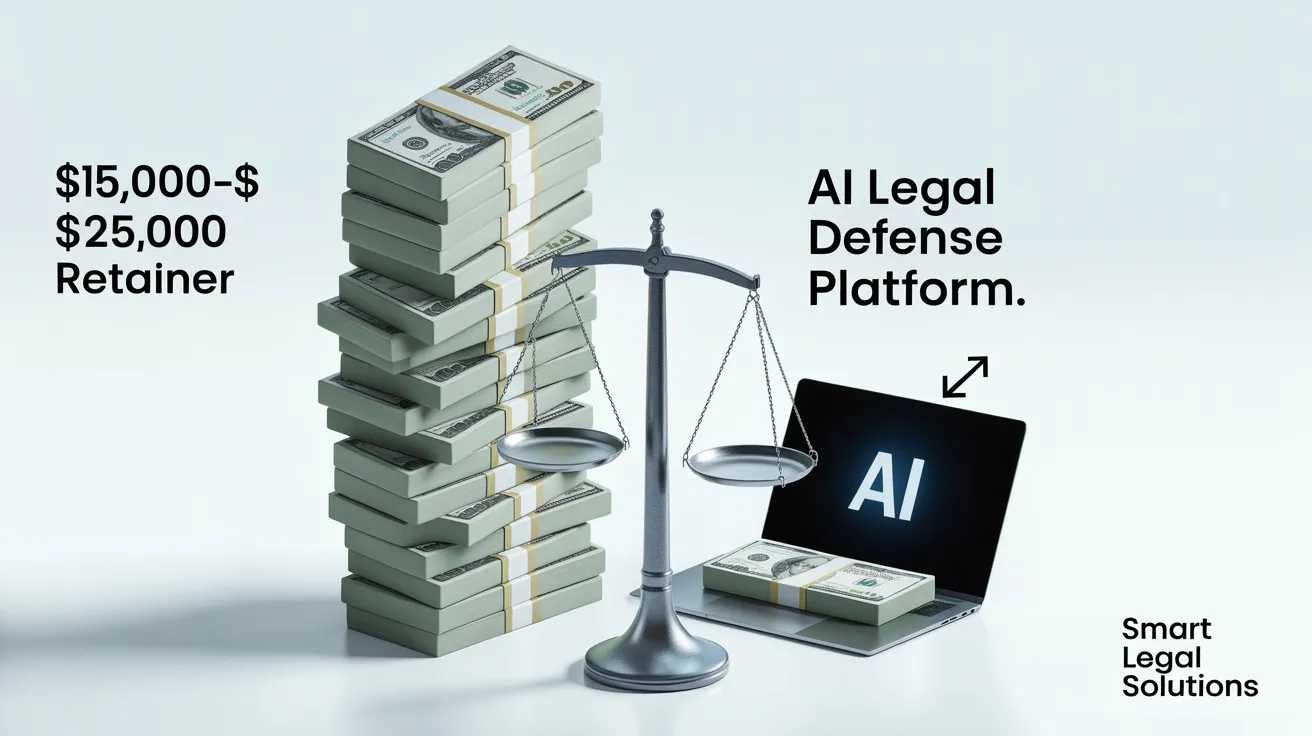
The message arrives like a digital punch to the gut. An email appears with a subject line that makes your stomach turn: "URGENT: Legal Payment Required" or "URGENT: Cease and Desist." Your mind abruptly switches from revenue forecasts and business development to one terrifying number. A claim seeking $50,000, $100,000, or even more for an alleged copyright violation or a historical unpaid obligation. Your initial response is to call a lawyer, but this instinct is followed by another round of panic when you learn about the retainer fee: $10,000, $15,000, or even $25,000 just to begin. Countless small business operators confront this difficult dilemma-a choice between a settlement that could destroy your business and a financially crippling legal battle.
What if there was another way? What if you could defend yourself smartly, effectively, and within budget? For a growing number of entrepreneurs, that third option is becoming a reality through AI legal defense. This isn't meant to substitute legal professionals, but about transforming how legal matters are handled. It's about using powerful technology to analyze threats, prepare responses, and understand your rights before spending a single dollar on legal fees. This demonstrates how business owners are regaining control on legal bullies, cutting down on substantial legal costs, and gaining the courage to protect their enterprises in today's litigation-prone business landscape.
Vital Insights
- Power Dynamics are Changing: Artificial intelligence is enabling company leaders to manage many legal threats on their own, decreasing dependency on expensive legal counsel for early defense phases.
- Understanding is Your Greatest Shield: Legal threats against small businesses often serve as scare tactics and usually lack solid legal basis. Knowledge of basic copyright law and debt validation procedures serves as your strongest defense.
- AI as a Research Assistant: Artificial intelligence can process legal documentation, pinpoint issues in claims, and find applicable legal precedents in much faster than traditional methods, cutting down on expensive billable hours.
- Pricing is a Critical Element: Considering typical legal retainers that begin at $10,000-$25,000, AI-driven legal resources deliver an affordable initial legal safeguard at a significantly lower price point.
- Understanding When to Seek a Professional: AI technology serves as a useful tool for preparation and initial response, but it should not be considered a replacement for a qualified lawyer when dealing with legal proceedings or intricate legal issues.
Navigating the Legal Landscape for Small Business Owners
The life of a small business owner involves wearing multiple hats. You find yourself acting as the business leader, marketing chief, human resources head, and often the cleaning staff. Legal disputes are the last thing you need in your business journey. Regrettably, contemporary business operations face numerous legal challenges. Research from 2023 reveals that American small enterprises suffer $160 billion yearly due to lawsuits. This isn't just about high-profile legal cases; these are the common legal threats that gradually drain businesses.
The Rise of the Legal Intimidator
Numerous legal threats have little to do with justice; they are essentially a numbers game. Copyright trolls, aggressive debt collectors, and predatory firms distribute thousands of demand letters, well aware that a portion of people who receive them will be too fearful or unaware to fight back. They count on the fact that legal representation expenses usually cost more than the demanded settlement amount. This generates a troubling reason to settle, despite whether the claim has merit. These entities function as legal bullies, utilizing intimidation as their main tactic.
Critical Threats to Entrepreneurial Success
While legal challenges can arise from various sources, a few common issues consistently affect small companies:
- Copyright Infringement Claims: Such claims are commonly associated with visual content used on company websites or blogs. The majority of these claims are generated automatically and distributed without proper manual verification of fair use or contextual factors.
- Debt Collection Notices: Collectors often send notices regarding expired, disputed, or questionable debts. Collection agencies typically acquire debts for minimal costs and then use aggressive tactics to recover the entire balance.
- Cease and Desist Letters: These written warnings typically handle various types of concerns, from trademark disputes to contract violations. They are commonly utilized to pressure competitors or discourage critics.
- Banking and Payment Disputes: Disagreements involving financial institutions or payment services can freeze accounts and halt operations, forcing business owners to take defensive measures.
When business owners are confronted with these challenges, each situation feels like a complete crisis. The reality, however, is that a majority of these issues are primarily education and preparation matters, instead of matters requiring litigation.
The Reality of Legal Defense Expenses: Traditional Systems Failing Small Business Owners
The conventional method for handling a legal challenge is straightforward: you engage legal counsel. For large corporations with internal legal departments and significant financial means, this is a regular expenditure of business operations. For a small business, it's a significant financial strain. The typical legal expenses for a small business is approximately $13,300 each year, but this figure can rise significantly when court proceedings begin, with fees ranging from $3,000 to more than $150,000.
The Retainer Trap
The most significant immediate obstacle is the attorney retainer. A retainer is basically an initial deposit for legal services, and for litigation cases, it's rarely below five figures. This leads to what might be described as the "retainer trap." A company might face a request for $8,000. Legal counsel requires a $15,000 retainer to contest the claim. When looking at the numbers, the practical decision seems to be settling for the $8,000 demand, even if the allegations are unfounded. This is the approach that aggressive plaintiffs depend on. They've strategically set their requests to be slightly under the threshold cost for legal representation.
Incentive Misalignment
Furthermore, the conventional legal system is built on billable hours. The more time spent on a case, the higher the lawyer's fees. While ethical lawyers aim for efficiency, the framework naturally incentivizes extended litigation and complex procedures. This creates a clear contradiction with what matters to business proprietors, who need solutions that are quick, efficient, and cost-effective. The main goal for the business owner is to solve the problem, not to engage in a time-consuming and expensive legal process.
AI's Transformation of Legal Support for Business Owners
Over the years, the steep pricing of legal assistance generated a massive gap in the market. No practical solution existed for entrepreneurs who weren't able to pay for legal counsel but didn't want to surrender to unsubstantiated accusations. AI technology is currently bridging that gap. It's not a perfect answer, but it functions as an effective instrument that levels the playing field by substantially lowering the cost and time involved in the crucial first phases of mounting a legal response.
AI: Your Digital Legal Assistant
Consider AI similar to a paralegal equipped with the capability and photographic memory to analyze thousands of pages every minute. Let's explore its applications:
- Document Analysis: Artificial intelligence tools can efficiently examine a demand letter or legal complaint and rapidly detect essential elements, particularly claimed violations, legal statutes referenced, and requested settlement figures. The technology analyzes the materials to numerous comparable precedents to highlight trends and possible flaws.
- Legal Research: In place of an attorney dedicating considerable time (at $300+ per hour) investigating legal precedents, an AI can analyze legal resources and deliver applicable case law within moments. The system can identify information on fair use, debt validation requirements, or specific consumer protection laws that apply to the matter.
- Drafting Assistance: AI is capable of creating preliminary response letters. After inputting the claim details and applicable legal standards, it can create a polished, systematic document that asserts your rights and makes it clear to opponents that you are prepared to contest their claims.
Here's where everything shifts. The first evaluation and examination, which traditionally costs more info thousands in legal fees, can be handled with a fraction of the cost in an AI-powered educational platform.
The AI Legal Defense Framework: A Step-by-Step Approach
Using AI for legal defense is not just blindly relying on a chatbot. It involves following a methodical framework to assess the challenge, understand your position, and respond from a place of strength. This framework typically consists of three essential phases.
Phase 1: Initial Assessment and Analysis
The first step is to leverage artificial intelligence to analyze the situation at hand. You can input the demand letter or legal threat into an AI tool and request an initial evaluation. The aim is to answer several key questions:
- What is the primary claim
- Which specific statutes or laws are being cited?
- Is the party filing the claim the legitimate rights holder?
- What documentation have they shown?
- Do you notice any clear discrepancies within their submission?
This initial assessment enables you to progress from a state of panic to having clear understanding. It provides a clear, unbiased summary of the current state.
Phase 2: Research and Strategy
After understanding the claim, the next phase is to employ AI to research your defensive possibilities. For a copyright claim, you can ask the AI to analyze the four factors of fair use and their significance in your specific situation. For a debt collection notice, you need to ask it to outline the validation requirements under the Fair Debt Collection Practices Act (FDCPA). This step is focused on developing your case. You are gathering the legal principles and facts that will form the framework of your response. This is also where you can begin to identify the shortcomings in your opposition's position.
Stage 3: Response Protocol
After completing your research, you can utilize AI to help craft a response. This doesn't mean sending a computer-generated response. The goal is using AI as your writing assistant. You input the main arguments and relevant details, and the AI helps formulate these elements into a well-structured and polished response. Your response should typically:
- Verify receiving their communication.
- Articulate your viewpoint in a clear and concise manner.
- Include the specific legal tenets that back up your position.
- Ask for extra documentation and verification, when appropriate.
- Present information objectively without emotional bias.
This organized reply demonstrates to the opposing party that you are thorough, informed, and ready to defend your position. It promptly shifts the dynamic from one of pressure to one of a professional legal conversation.
AI-Powered Copyright Claim Analysis and Response
Intellectual property disputes stand as a major concern for online businesses. A company might use a photograph on their website, and later face a hefty financial demand from an image rights holder down the line. AI technology shows remarkable efficiency for such cases.
Evaluating the Claim
An AI tool can assist in examining the claim. It examines the legal notice to check whether it provides proof of copyright ownership, a legitimate copyright registration, and a clear explanation of the supposed copyright breach. A lot of claim letters from aggressive copyright enforcers are purposely unclear and lack this vital documentation. As business leader Tony copyright of LinkDaddy learned, AI can be used to analyze the merit of a copyright claim, resulting in a successful challenge against a $500,000 copyright lawsuit without legal representation.
Exploring Fair Use Concepts
AI can be a valuable instrument for exploring the doctrine of fair use. Fair use represents a legal principle that enables the limited use of copyrighted material without authorization from the rights holder. An AI can help you comprehend the four factors of fair use and how they may impact your case, offering you with the justification necessary to establish a solid defense.
Debt Collection Defense: AI-Powered Validation Strategies
Yet another domain where AI is creating meaningful change relates to defending against aggressive debt collectors. The FDCPA grants individuals and entrepreneurs certain protections, like the ability to demand debt documentation.
The Power and Impact of a Letter of Validation
A debt collector is required to provide you with details about the debt, referred to as validation details. When you submit a debt validation letter, you are officially asking that the collector demonstrate that you owe the debt and that they have the legitimate claim to collect it. A lot of debt collectors, particularly those who buy old debt, fail to produce this documentation. AI technology can support you with creating a thorough debt validation letter that demands all the required details, such as:
- The original creditor's name
- The account number from before
- The original the initial signed contract.
- A detailed account of the claimed balance due.
Delivering a proper validation letter often stops a debt collector from proceeding. When they fail to validate the debt, they cannot legally proceed with collection efforts.
Navigating AI Legal Defense: Understanding Its Strengths and Weaknesses
It is crucial to understand the constraints of AI in the legal sector. AI operates as an educational and preparatory tool, not a certified legal practitioner. Understanding the boundary between what you can address personally and when you need professional help is the key to a successful defense strategy.
Optimal Cases for AI Defense Implementation
- First-Stage Threat Review: Analyzing legal demands and cease and desist documentation.
- Responding to Baseless Claims: Crafting professional replies to aggressive collectors and copyright claims who depend on threatening behavior.
- Legal Research: Understanding the legal rights and the legal frameworks that apply to your circumstances.
- Organizing Your Case: Organizing your documents and key points before consulting a legal professional, which can help you save thousands in legal fees.
Situations Requiring Immediate Legal Counsel
There are specific cases when you shouldn't attempt a DIY legal defense. When you receive an actual lawsuit, you should seek legal representation. Other scenarios calling for professional legal help are as follows:
- Criminal allegations.
- Regulatory investigations carried out by government agencies.
- Intricate legal situations concerning numerous parties or jurisdictional matters.
- Critical situations where the financial impact could destroy your enterprise.
Under these circumstances, the purpose of AI shifts from a primary defense mechanism to a supplementary resource. You can leverage it to become more knowledgeable and prepared as a client, but you require a human expert on your side.
Building Your Legal AI Defense Toolkit
Beginning AI legal defense doesn't require a degree in computer science. It essentially requires a desire to learn and availability of the right tools. The heart of your toolkit will be a robust language model like ChatGPT or Claude, paired with an learning platform that delivers tailored prompts and frameworks for common legal threats.
The Vital Importance of Professional AI Instructions
The success of any artificial intelligence tool relies on the specificity of your instructions. A general prompt like "write a response to this demand letter" will result in a general and possibly unsuitable outcome. On the other hand, a specialized prompt will direct the AI to perform a thorough analysis and create a reply founded on specific legal principles. This explains why platforms that deliver proven prompts and frameworks are so important.
Small Business Success Stories: Standing Strong
The inspiring case of Tony copyright, who protected his business over $511,000 by using AI to defeat three major legal threats, serves as a powerful illustration of what is possible. Yet he is not alone. Throughout the country, small business owners are realizing that they have more power than they imagined. They are leveraging AI to challenge baseless copyright claims and require debt collectors to authenticate their debts. These successes are not simply about reducing costs; they are about taking back a sense of control and refusing to be victims of a system that has historically been biased against them.
The Future of Legal Defense for Small Business Owners
The incorporation of AI into the legal sector is just beginning to emerge, but the direction is clear. Legal services are becoming more attainable and cost-effective. The conventional guardians of the legal profession are facing disruption by technology that empowers private citizens and companies. This isn't to say that lawyers will become obsolete. It means that their role will transform. They will have the opportunity to dedicate themselves to the sophisticated, challenging tasks that truly requires their expertise, while AI manages the more basic and preliminary work.
Business owners on a smaller scale, this represents a welcome change. It means that moving forward, a legal threat won't necessarily be a cause for financial anxiety, but rather an issue to be addressed methodically and strategically.
Taking Action: Getting Started with AI Legal Defense
For small business owners, the time to start learning about AI legal defense at this moment, prior to any issues arising. Learn about the tools and platforms that are available. Learn the essential aspects of legal protection and financial recovery. With these preparatory actions, you can establish strong defenses for your company. You can evolve from being a potential target into a well-equipped protector of your hard-earned success.
Questions and Answers (FAQ)
Is AI genuinely useful for legal defense, or is it merely empty promises?
AI functions as an essential instrument for legal defense, but it's crucial to understand its role. It is not a replacement for a lawyer. Instead, view it as a highly effective research and preparation assistant. It assists in analyze documents, grasp complicated legal matters, and prepare preliminary responses, which can help you save considerable time and expenses. The important thing is to employ it for the initial stages of a defense and to recognize when to involve a human expert.
Should I opt for AI tools or professional legal services?
Make use of AI tools for the first analysis of legal challenges, when crafting responses to seemingly baseless claims (like those submitted by copyright trolls), and for organizing your case materials. You should consult a lawyer without delay if you are presented with a lawsuit, encounter criminal charges, or are dealing with a complicated legal situation that could influence your business. A good rule of thumb is: leverage AI for groundwork, but turn to a lawyer when litigating.
What is the potential cost savings when using AI for legal defense?
The financial benefits are considerable. Legal fees for initial analysis and demand letter response typically run several thousand dollars. By leveraging AI technology, you can complete this work at a substantially reduced cost. When threats are resolved at this early stage, savings can reach tens of thousands of dollars. If you ultimately need a lawyer, AI-assisted preparation can minimize their billable time.
What are the key limitations of AI in legal contexts?
AI systems face several significant constraints. It lacks legal standing and cannot serve as legal representation. It doesn't possess the sophisticated judgment of a seasoned lawyer and may not grasp the complexities of specific cases. Additionally, it functions based on its training data, which could be outdated. Most importantly, an AI system cannot provide legal advice, only information and support.
What's the legality of leveraging AI for legal documentation review?
It is absolutely legal to utilize AI for document analysis and comprehension. This is merely using technology as a research and preparation tool, comparable to using a search engine or word processor. The important legal distinction is that you cannot claim to be a legal professional without proper credentials, and artificial intelligence cannot function as your legal representative.
6. How do I recognize if a legal threat is legitimate or just pressure tactics?
This is where AI analysis becomes very helpful. An authentic legal claim will generally be specific, present supporting documentation (such as a copyright registration number), and originate from a reputable law firm. An intimidation tactic, in contrast, is often unclear, doesn't include evidence, and may contain aggressive or unprofessional language designed to pressure you into immediate payment. AI helps you recognize these warning signs.
How does the Fair Debt Collection Practices Act (FDCPA) safeguard my rights?
The FDCPA is federal legislation that limits the actions of third-party debt collectors. You are safeguarded against unfair, deceptive, or abusive practices. One of its most powerful provisions is your ability to verify the debt. If a collector cannot prove your responsibility for the debt and their legal right to collect, they must stop all collection efforts. This serves as a vital safeguard for small business owners who may be targeted for old or invalid debts.